Sensory play for young children is one of the most powerful learning experiences in early childhood — and it requires no screens, no instructions, and no right answers. If you’ve ever watched a child lost in a tray of sand or transfixed by coloured light, you’ve already seen it in action. But what makes it so valuable, and how can you bring more of it into your child’s day?
What Is Sensory Play?
Sensory play is any activity that stimulates a child’s senses — touch, sight, sound, smell, and taste — as well as their sense of balance and body awareness. Unlike structured activities with a fixed outcome, sensory play is open-ended: there is no right answer, no finished product, and no instructions to follow. The process itself is the point.
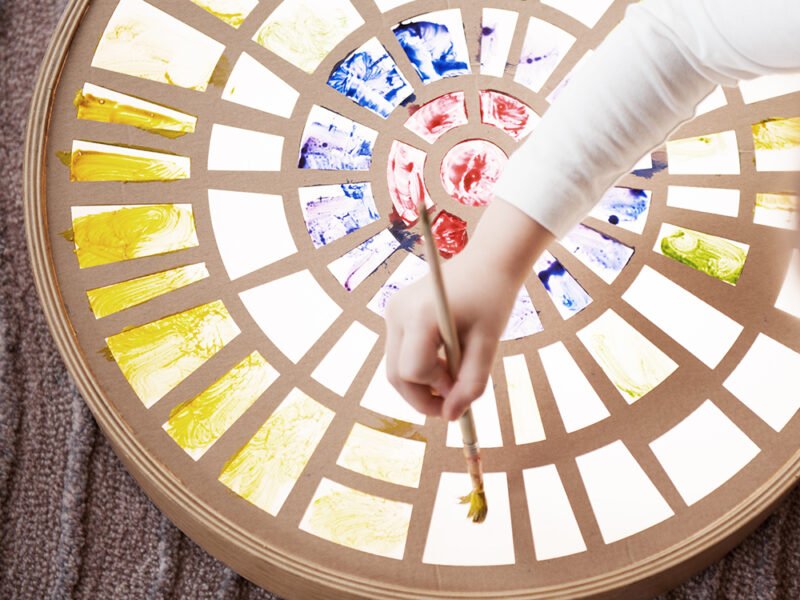
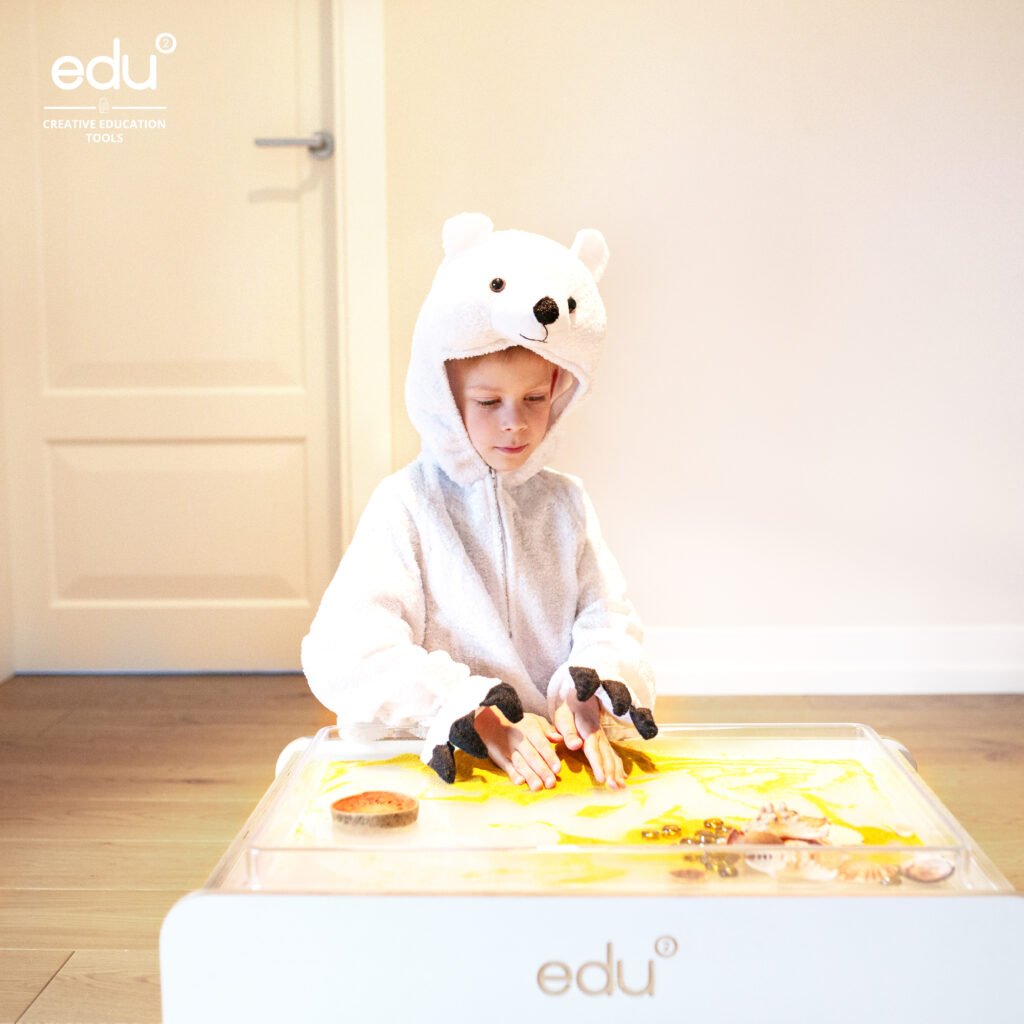
A child pouring water from one container to another, pressing their hands into kinetic sand, or exploring translucent shapes on a light table is not “just playing.” They are building neural connections, developing fine motor skills, learning cause and effect, and practising focus — all without being taught in a traditional sense.
The Science Behind Sensory Play
Research in early childhood development consistently shows that hands-on, sensory-rich experiences are fundamental to how young children learn. A 2024 study published in Frontiers in Education (Fan, Chong & Li) compared multi-sensory and traditional toys in children aged 3–6 and found that multi-sensory materials improved both engagement and learning outcomes. Separately, research from Clemson University (Raven & Wenner, 2023) found that when children handle natural materials — sand, clay, ice — and describe what they feel, they build vocabulary and gain tools to express emotions. The Reggio Emilia approach, one of the most respected educational philosophies in the world, places the environment itself at the centre of learning for the same reason: children learn best when surrounded by materials that invite exploration and active discovery.
Key benefits supported by research include:
- Cognitive development — Sensory play builds neural pathways that support problem-solving, memory, and language development.
- Fine and gross motor skills — Manipulating materials like sand, water, or building blocks develops the hand-eye coordination children need for writing, drawing, and daily tasks.
- Emotional regulation — Tactile experiences, particularly with calming materials like sand or water, are known to help children manage stress and anxiety.
- Social skills — Shared sensory play encourages communication, turn-taking, and cooperative thinking.
- Creativity and imagination — Open-ended materials with no fixed use challenge children to invent, imagine, and think independently.
A note on the evidence: not all sensory play activities are equally supported by research. A 2025 systematic review in Frontiers in Pediatrics, covering a decade of studies, found the strongest evidence for hands-on tactile engagement with physical materials — particularly activities involving touch, texture, and manipulation. Claims about specific tools or environments producing specific outcomes in typical children are harder to verify. This matters because it points to what is genuinely reliable: giving children real materials to handle, explore, and act upon. That is the core of what sensory play does well.
What Ages Benefit Most from Sensory Play?
Sensory play is valuable from infancy, but the ages of 3 to 8 years represent a period of especially rapid development. During these years, children’s brains are forming connections at a high rate, and they tend to learn most readily through physical experience and direct exploration rather than abstract instruction. This is why leading educators recommend that preschools and kindergartens prioritise sensory-rich environments over worksheets and screen time.
Children in this age group benefit enormously from:
- Water and sand tables that encourage scientific thinking (volume, weight, flow)
- Light tables that make colours, shapes, and transparency visible and magical
- Open-ended creativity kits that prompt storytelling and imaginative construction
- Sensory play spaces that give children a defined, calm area to explore freely
Open-Ended Play: Why “No Instructions” Is a Feature, Not a Bug
One of the most important principles in sensory play for young children is open-endedness. When a toy has only one correct use, a child’s exploration ends the moment they’ve “solved” it. Open-ended materials, by contrast, can be used in hundreds of ways — and children will discover uses that adults never imagined.
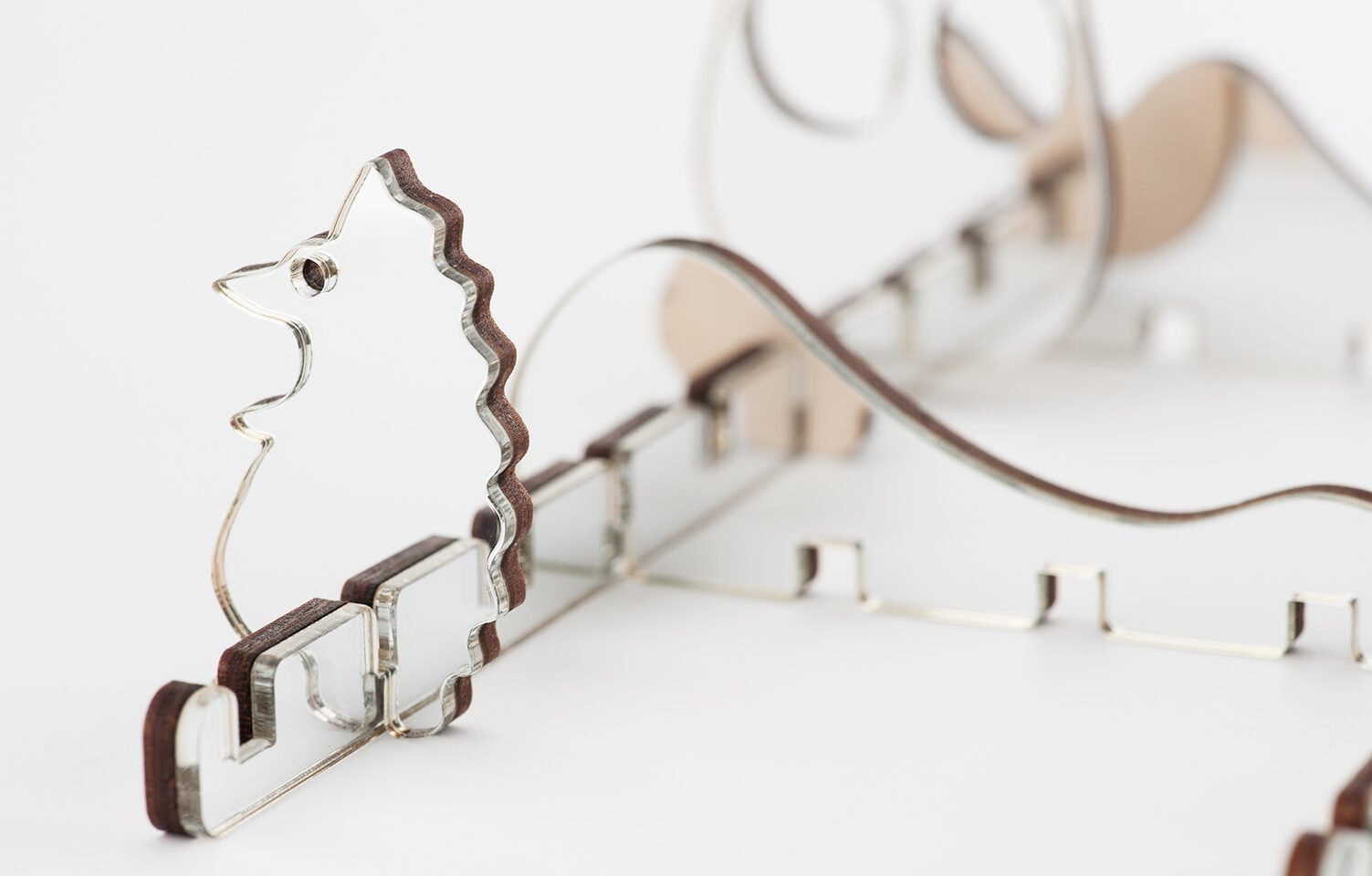
At edu2, this philosophy is built into every product. edu2 playthings come without play instructions. This is intentional. We believe children are natural inventors, and the role of play materials is to create possibilities — not prescribe them. The edu2 Light Table for Sensory Play, for example, can be used for colour mixing, shadow play, sand drawing, storytelling with translucent figures, or simply as a calm, glowing space to sort and arrange objects. Every child finds their own way to use it.
Sensory Play at Home vs. Kindergarten
Parents sometimes worry that meaningful sensory play requires elaborate setups or specialist equipment. In reality, a bowl of dried pasta, a tray of shaving foam, or a container of water with measuring cups is enough to start. The principle — giving children unstructured time with interesting materials — matters more than the materials themselves.
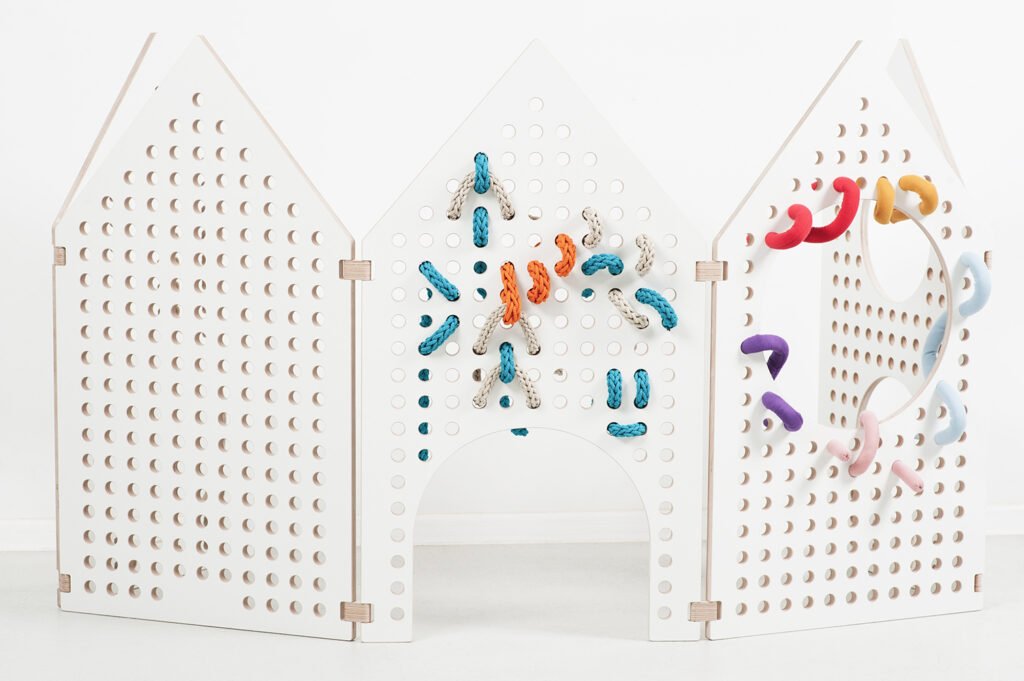
That said, purpose-designed sensory play furniture and tools make a significant difference in how deeply children engage and how long they sustain focus. A sand and water play table at the right height invites more sustained exploration than an improvised setup on the kitchen floor. And for children who benefit from a quieter, more enclosed space — to focus, retreat, or engage in imaginative solo play — a dedicated sensory playhouse serves a different but equally important function: it signals to the child that this space belongs entirely to them. Both types of environment, active and calm, have a place in a well-considered play space. It also signals to the child: this is a space for you, for your ideas.
For kindergartens and preschools, the investment in quality sensory play environments pays dividends in children’s wellbeing, creativity, and readiness to learn.
How to Choose Sensory Play Materials
When selecting materials for sensory play, a few principles are worth keeping in mind:
- Start simple — Before investing in dedicated furniture or equipment, observe what your child is naturally drawn to. A tray of sand, a bowl of water, or a container of dried beans costs almost nothing and will tell you a lot about their preferences.
- Open-ended use — Can the child use it in multiple ways, or does it have only one function? Materials with a single correct use limit exploration; materials without a fixed answer extend it.
- Durability and safety — Is it made from non-toxic materials? Will it last years, not months? In a kindergarten setting especially, this matters significantly.
- Design quality — Does it fit naturally into a home or classroom without adding visual clutter? Calmer environments tend to support more focused play.
- Age appropriateness — Does it match the child’s current stage while offering room to grow into?
edu2 products are designed with all of these principles in mind. Created in Lithuania and recognised with international design awards including the A’Design Gold, IDA Silver Awards, edu2 products are used by families and kindergartens across Europe. Each product is crafted to be beautiful enough for a modern home and durable enough for daily creative play.
Getting Started
If you’re new to sensory play, start simply. Observe what your child is naturally drawn to — water, building, drawing, small figures, light — and follow that interest. Provide materials that match their curiosity and then step back. You may be surprised how long they stay engaged, and how creative they become when no one is telling them what to make.
When you’re ready to move beyond improvised setups, explore our range of sensory play furniture and creative play materials at edu2play.com — designed for children aged 3–10, built to last a childhood, and used in homes and kindergartens across Europe. If you’re not sure where to start, the Sand and Water Play Table KOPA and the Sensory Kids’ Playhouse are a good place to begin. Or sign up for our newsletter — we write about play, child development, and the thinking behind what we make.
Last updated: March 2026